Service areas
Yarmouth, MA septic and Title 5 help while the sewer is built
Almost every home still on septic, a $207 million first sewer aimed at Route 28 and three estuaries, and as-builts posted online.
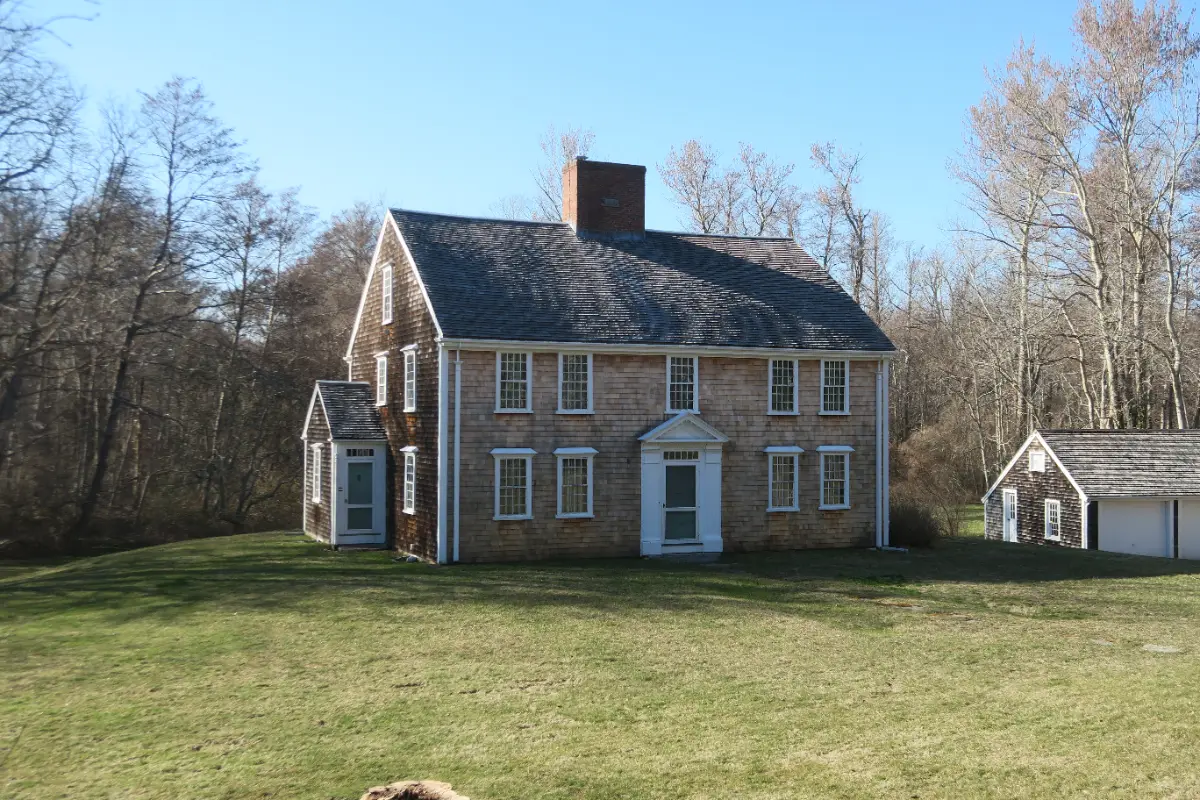
Yarmouth’s first sewer, and who stays on septic
Almost every Yarmouth home is on septic today, and most will stay that way through Phase 1. On April 25, 2023 Town Meeting was asked to approve $207.2 million for Phase 1 pipe and a new Water Resources Recovery Facility, per the town’s wastewater FAQ. The state’s 2026 Clean Water SRF plan lists the project at $205,841,464.
Phase 1 concentrates on commercial properties and the Route 28 corridor plus the nitrogen-sensitive areas around Bass River, Parkers River and Lewis Bay, taking those septic systems offline first. A 2011 Comprehensive Wastewater Management Plan that proposed phased sewering was rejected at Town Meeting, so the 2023 vote was the town’s second attempt. The Cape Cod and Islands Water Protection Fund has committed about $150 million in subsidy for 2023 through 2026, per the Cape Cod Commission, which lowers what the town recovers through betterments and rates. The Phase 1 street list, construction timeline and connection deadline were not published in a form we could verify.
The watershed numbers explain the priority. Parkers River lies 100% within Yarmouth, holds 3,318 parcels, 92% residential, with septic supplying 85% of controllable nitrogen, and needs a 53% total cut, 67% from septic. Bass River holds 12,070 parcels across Yarmouth and Dennis, with Yarmouth carrying about 56% of the load. All three watersheds, with Lewis Bay, became Nitrogen Sensitive Areas on July 7, 2023 under the amended Title 5, and Yarmouth filed a Notice of Intent for each that day, 23-WP94-0006, 0007 and 0008 on the MassDEP table. Those filings suspend the five-year I/A upgrade clock while the sewer is built. Sellers in the three watersheds disclose NSA status before closing.
Yarmouth Health Department permits and the online as-built lookup
The Yarmouth Health Department at 1146 Route 28 in South Yarmouth, (508) 398-2231 ext. 1240, open Monday through Friday 8:30 am to 4:30 pm, issues the Disposal System Construction Permit. Its Title 5 page lists ext. 1241 and offers an online septic as-built lookup and pumping-history reports, which saves a locate fee at inspection time.
The application form requires a plan and soil evaluation by a licensed engineer, names the licensed installer, uses a 440 gpd minimum design flow on its sample, and bars use of the system until the Board issues a Certificate of Compliance. That form is dated October 2017 and shows a $55 fee; the current amount was not verifiable, so confirm it with the department. Review runs under Title 5 and the Town of Yarmouth Sewage Disposal Regulations, a set of local amendments to Title 5 posted on the regulations index whose specifics we could not read. At sale, every system must be inspected and certified under Title 5 by a MassDEP-approved System Inspector, with the report filed within 30 days.
The department’s most useful local policy is in its wastewater FAQ: for an owner whose system fails before the neighborhood’s sewer phase is built, the department works case by case and may allow a temporary repair or replacement rather than a full I/A upgrade. The state’s two-year deadline after a failure under 310 CMR 15.305 still applies, so bring the inspection report in early. The Title 5 guide covers the rest of the state process.
Betterments of about $510 a year, AquiFund and the credit
Yarmouth has published what Phase 1 betterments look like over 30 years: about $510 a year for a 3-bedroom single-family house, $340 for a 2-bedroom condo, $8,500 for a 50-room hotel and $2,704.55 for a 50-seat restaurant, per the wastewater FAQ. The private lateral, plumbing and tank abandonment are separate.
The Cape Cod AquiFund lends at 0% or 2% to income-qualified owner-occupants for a Phase 1 connection once the town’s notice arrives, at 4% for septic repair, replacement and I/A work on a primary residence, and at 5% for seasonal, rental or soon-to-list homes, up to 20 years on the tax bill; the town’s FAQ also points connecting owners to Cape Cod 5 bank financing. The state septic credit returns 60% of up to $30,000 for a failed system at a principal residence, $18,000 lifetime and $4,000 a year, and since tax year 2024 it covers sewer connections required by a watershed permit under TIR 24-14. Program terms are set by the agencies and change; confirm with the state or county page linked here. The AquiFund guide covers the application.
Yarmouth’s most frequent septic jobs
Outside Phase 1, a full septic system replacement after a failed sale inspection is the standard job, and Title 5 inspections precede every sale in all four villages. Inside Phase 1, a sewer connection with tank abandonment will eventually replace the system.
For a house a few years from its phase, failed Title 5 repair and upgrade work, a targeted septic repair or scheduled septic pumping is what the Health Department’s case-by-case policy is built for, and the sewer-versus-septic guide weighs the choice.
Bass River is the divide
Yarmouth straddles two groundwater lenses, the Sagamore and the Monomoy, with Bass River as the boundary, per the Commission’s watershed summary. South and West Yarmouth sit on outwash sand and gravel south of Route 6; Yarmouth Port sits on the Sandwich moraine along Route 6A, per the Cape Cod Commission.
The dense south-side neighborhoods along Lewis Bay, Parkers River and Bass River have shallow groundwater and coastal flood zones, which is where raised fields and pump chambers concentrate. The town’s population reached 25,023 in 2020, up from 23,793.
Barnstable shares Lewis Bay and its own sewer program; Dennis shares Bass River and approved its Phase 1 in 2024. All towns we cover are on the service areas page.
Permits
Septic permits in Yarmouth
- Office
- Yarmouth Health Department (Board of Health)
- Address
- 1146 Route 28, Yarmouth MA 02664
- Hours
- Monday-Friday 8:30 am - 4:30 pm
- Website
- www.yarmouth.ma.us/127/Health
Confirm hours and fees with the office before you visit; towns change them without notice.
Money
Help paying for septic work
Two public programs pay for a large share of most Title 5 upgrades. Which one applies depends on the county the house is in.
Statewide, principal residence
State income tax credit for Title 5 work
- 60% of qualifying repair or replacement costs, on up to $30,000 of expenses
- Up to $18,000 in total credit per household, taken at up to $4,000 a year
- Unused credit carries forward for up to 5 years
- Applies to the home you live in, not a rental or second home
Barnstable County homeowners only
Low-interest county financing (AquiFund)
- County-run Community Septic Management Loan Program
- Interest tiers from 0% to 5%, set by the type of work and whether you live there year-round
- Repaid over up to 20 years as a betterment on your property tax bill
- Covers Title 5 repairs, replacements and nitrogen-reducing upgrades
Plymouth County homeowners
Financing for South Shore homes
- AquiFund does not extend past the Cape Cod Canal
- The Town of Plymouth runs its own Title V septic loan, repaid as a betterment on the tax bill
- MassHousing offers a septic repair loan for eligible owner-occupants statewide
- Ask your board of health which town programs are open this year
Program terms are set by the agencies and change; confirm with the state or county page linked here before you count on a number.
Licensing
Check the credentials before you sign
Massachusetts has no single statewide septic contractor license. Two separate approvals matter. A Title 5 inspection is valid only when a System Inspector approved by MassDEP performs it. Installation and repair work is permitted town by town: each board of health licenses installers and issues the Disposal System Construction Permit for the job.
You can check both yourself. The state publishes the inspector training and approval program, and the regulation itself sets out who may do what.
Three questions to ask
-
Which of you holds the Title 5 System Inspector approval, and can I see the certificate?
Only a MassDEP-approved System Inspector may sign an official inspection form. The approval is personal to the inspector, not to the company.
-
Are you on this town’s current list of approved septic installers?
Installation licenses are issued by each board of health, one town at a time. A crew licensed in Falmouth is not automatically licensed in Bourne.
-
Who pulls the permit, and will I get the as-built plan and the Certificate of Compliance?
The permit and the final sign-off are what a future buyer’s inspector will ask for. Get it in writing that both come to you when the work closes out.
The process
From your request to a site visit
-
Your request goes to one local septic company
It goes to a single septic company that works in your town and handles your kind of job. It is not sold to a list, and you will not get calls from five companies.
-
They call to set up a site visit
Expect a call, usually within one business day. The contractor asks about the house, the inspection report if you have one, and your timing, then books a visit.
-
You get a written quote and decide
After the visit you receive a written estimate with the scope and the permit plan. There is no fee and no obligation. If it is not a fit, say so and that is the end of it.
Questions homeowners ask
Is Yarmouth in a nitrogen sensitive area?
Yes, in three watersheds. Parkers River is entirely within Yarmouth; Bass River is shared with Dennis, with Yarmouth holding about 56%; Lewis Bay is shared with Barnstable. All three were designated Natural Resource Area Nitrogen Sensitive Areas on July 7, 2023, and Yarmouth filed a Notice of Intent for each that day, so the state's five-year I/A upgrade clock is suspended while the sewer is built. Sellers in those watersheds disclose NSA status before transfer.
Does Yarmouth have sewer?
Not yet in any meaningful way. The town is building its first system after Town Meeting was asked on April 25, 2023 to approve $207.2 million for Phase 1 pipe and a new Water Resources Recovery Facility. Phase 1 concentrates on commercial properties along Route 28 and nitrogen-sensitive areas around Bass River, Parkers River and Lewis Bay; most residential neighborhoods stay on septic for now. The Phase 1 street list, timeline and connection deadline were not verifiable; ask the town.
Where do I get a septic permit in Yarmouth?
The Yarmouth Health Department at 1146 Route 28, South Yarmouth, (508) 398-2231 ext. 1240 or 1241, open Monday through Friday 8:30 am to 4:30 pm, issues the Disposal System Construction Permit. The application names the licensed installer and comes with a plan and soil evaluation by a licensed engineer, and the system cannot be used until the Board issues a Certificate of Compliance. The current permit fee was not verifiable; only a 2017 form was found.
Can I use AquiFund in Yarmouth?
Yes. Yarmouth is in Barnstable County, so the Cape Cod AquiFund applies: 4% for septic repair, replacement, cesspool upgrades and I/A systems on a primary residence, 5% for seasonal, rental or soon-to-list homes, and 0% or 2% for income-qualified owner-occupants connecting to the Phase 1 sewer once they hold the town's notice, up to 20 years on the tax bill. The town's wastewater FAQ also points connecting owners to Cape Cod 5 bank financing.
What will the Yarmouth sewer betterment cost me?
The town's wastewater FAQ gives 30-year examples: about $510 a year for a 3-bedroom single-family house, $340 for a 2-bedroom condo, $8,500 for a 50-room hotel and $2,704.55 for a 50-seat restaurant. Those are Phase 1 betterments spread on the tax bill; the private lateral, plumbing and abandonment of the septic tank are separate. Confirm your parcel's figure with the town, since assessments are set by bedroom count and use.
My system failed but my street is in a later sewer phase. Do I have to install I/A?
Usually not. The Health Department's FAQ says it works case by case with owners whose systems fail before their neighborhood's phase is built and may allow a temporary repair or replacement rather than a full I/A upgrade. State law still gives two years from the failed inspection to act, so bring the report and your street's phase status to the department before commissioning a design.
Tell us about your system
One call or form, a written quote after a site visit. Free for homeowners, no obligation.