Guide
Living with a cesspool on Cape Cod and the South Shore
What the state code does with a cesspool, where towns go further, and what the upgrade actually costs.
Written by the Cape Cod Septic Experts editorial team · How we check our facts
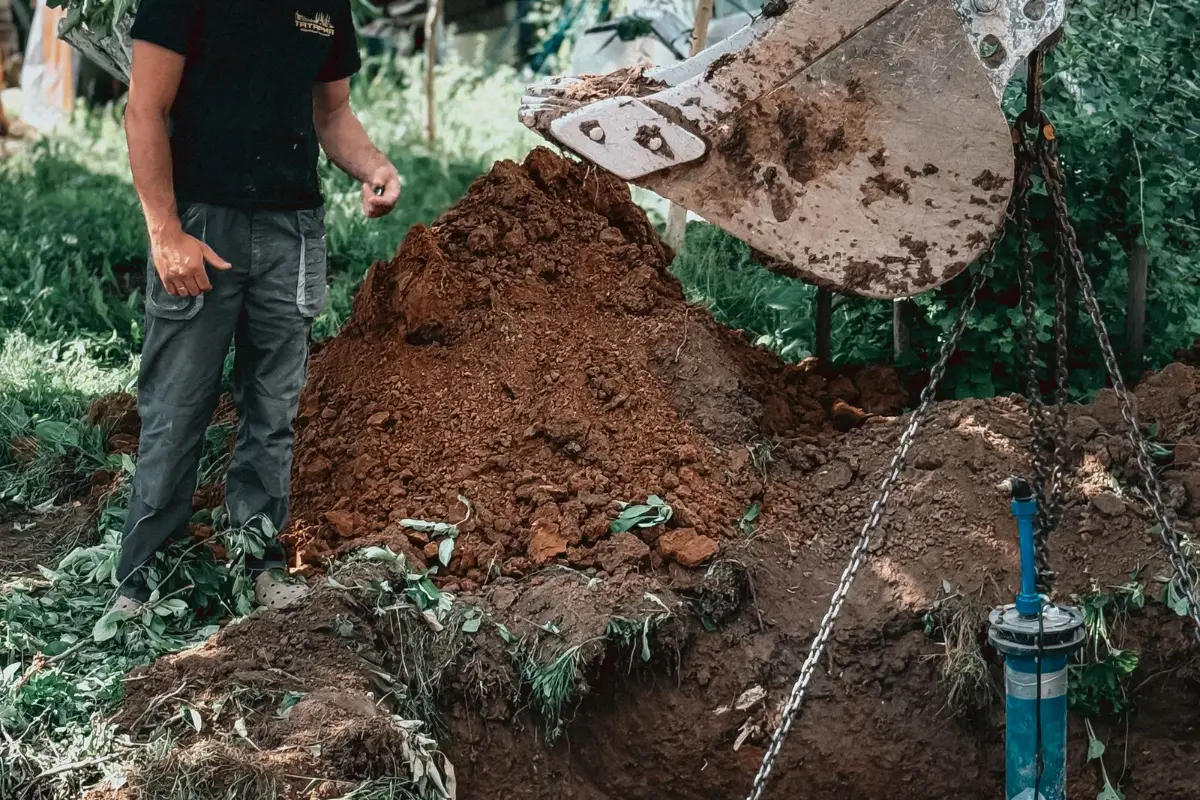
A cesspool is a pit with open joints or holes in its walls that takes raw sewage straight into the ground. Title 5 calls it nonconforming, which is not the same as illegal: under the state code it fails only on specific hydraulic and location criteria. Your town may go further, and several do. Replacing one is a full septic installation, roughly $20,000 to $35,000, and two programs take a real bite out of that number.
What sits under the lid, and why the code calls it nonconforming
310 CMR 15.002 defines a cesspool as a pit with an open-jointed lining or with holes in the bottom and sidewalls that receives raw sewage, and Title 5 classifies it as a nonconforming system. There is no septic tank in front of it and no leaching field after it. Solids settle in the same hole the liquid leaves through.
That design is why age matters so much. A cesspool built for a small summer cottage in 1955 is now serving a winterized house with two bathrooms and a dishwasher, and the sidewalls have been sealing themselves with biomat for seventy years. Duxbury’s board of health treats seepage pits the same way and requires every one of them to be located, opened and inspected (Duxbury). On the Cape’s outwash sands there is very little soil between the pit and the water table, which is the reason towns keep tightening the rules.
Where the state code draws the line on a working cesspool
A cesspool is not an automatic failure under 310 CMR 15.303. It fails when sewage backs up or breaks out, when the liquid sits within six inches of the inlet or has less than half a day’s design flow of capacity left, when pumping is needed more than four times a year, when any part sits below high groundwater, or when a well or surface water supply is too close.
Two other paths reach the same place. A cesspool within 50 feet of surface water or a bordering vegetated wetland lands in the “further evaluation required” box, where the board of health decides pass or fail after weighing site and water-quality factors. And 15.301(5) requires the upgrade before any change of use or increase in design flow, so an added bedroom, an ADU or a finished basement room of 70 square feet with a window makes the cesspool the first item on the project, not the last.
Mashpee’s flat no, and the towns that keep you guessing
One Cape answer is documented and plain: Mashpee’s health FAQ states that cesspools are an automatic failure at inspection. Barnstable County has also noted that some Cape boards ban them outright even though the state code lets an existing cesspool keep running (county explainer).
South Shore towns are often the stricter ones. Pembroke made a cesspool an automatic failure on conveyance under its local Title 5 rules (town regulation), Duxbury lists cesspools as automatic failures, and Marshfield’s Chapter 645 requires a single cesspool to be upgraded (town code). In Eastham, Chapter 301 as adopted on March 5, 2020 deems a cesspool substandard and requires the upgrade at any transfer of ownership (Chapter 301); a broader 2026 proposal was reported paused in September 2026 (Provincetown Independent), but its terms could not be confirmed on a town source. Brewster’s transfer regulation and Plymouth’s local rules are both described as reaching cesspools, and neither wording could be verified, so treat those two as a phone call rather than a fact.
Why a conversion is priced like a whole new system
There is no cheap version of this job. Converting a cesspool means installing a complete Title 5 system, so Massachusetts figures land at roughly $20,000 to $35,000 typical, $15,000 at the low end and up to $50,000 on a difficult lot (CheckMySeptic, secondary). No Cape contractor publishes prices, so every figure here is secondary.
Ignore the national averages. Angi’s cesspool conversion figure of about $6,300 describes a market with different soils and no Title 5. What the Cape price actually covers is a tank, a distribution box, a leaching area, engineering and soil testing at roughly $2,500 to $5,000, board of health fees, and then the old pit: 15.354 requires an application to the board at least 14 days before abandonment, a pump-out by a permitted hauler, and removal of the pit or breaking its bottom and filling it with clean sand. High groundwater pushes the design into a raised bed with a pump chamber, and a local rule may require a nitrogen-reducing unit instead: Eastham’s Chapter 301 calls for one on environmentally sensitive lots, within 100 feet of a well, or where groundwater is shallower than five feet.
Financing a cesspool upgrade in either county
The Massachusetts credit was written for exactly this. It returns 60% of eligible costs on up to $30,000 of work, capped at $18,000 in total and $4,000 a year with a five-year carryforward, for an owner who occupies the home as a principal residence (Mass.gov). Repairing or replacing a failed cesspool is named work on Schedule SC.
The borrowing depends on which side of the county line you are on. In Barnstable County, AquiFund lends at 4% for cesspool upgrades, or 5% if the property is a rental, seasonal, a condominium or listed for sale within 12 months, over terms up to 20 years repaid as a betterment on the tax bill. In Plymouth County there is no county equivalent: the Town of Plymouth runs a 5% fixed Title V loan over 5, 10 or 15 years for documented failures, and MassHousing lends up to $25,000 statewide through participating banks. Program terms are set by the agencies and change; confirm with the state or county page linked here.
Turning a cesspool into a dated plan
Start with two questions to the board of health: what does this town do with cesspools at inspection and at sale, and what is on file for my address. Ask for the as-built card and any prior pumping records at the same time. That call decides whether you are working to a sale deadline, a failure deadline or your own.
Then run the work in order, because the financing waits on the bid and the bid waits on the design. A soil evaluation and design come first, then bids from licensed installers on that one plan, then the loan application. The cesspool replacement page covers what gets built and what happens to the old pit, and septic system replacement sets out the same sequence for a conventional upgrade. If a sale is what brought you here, the Title 5 guide explains the four inspection results and the two-year upgrade clock, and the replacement cost guide has the price bands in detail.
Money
Help paying for septic work
Two public programs pay for a large share of most Title 5 upgrades. Which one applies depends on the county the house is in.
Statewide, principal residence
State income tax credit for Title 5 work
- 60% of qualifying repair or replacement costs, on up to $30,000 of expenses
- Up to $18,000 in total credit per household, taken at up to $4,000 a year
- Unused credit carries forward for up to 5 years
- Applies to the home you live in, not a rental or second home
Barnstable County homeowners only
Low-interest county financing (AquiFund)
- County-run Community Septic Management Loan Program
- Interest tiers from 0% to 5%, set by the type of work and whether you live there year-round
- Repaid over up to 20 years as a betterment on your property tax bill
- Covers Title 5 repairs, replacements and nitrogen-reducing upgrades
Plymouth County homeowners
Financing for South Shore homes
- AquiFund does not extend past the Cape Cod Canal
- The Town of Plymouth runs its own Title V septic loan, repaid as a betterment on the tax bill
- MassHousing offers a septic repair loan for eligible owner-occupants statewide
- Ask your board of health which town programs are open this year
Program terms are set by the agencies and change; confirm with the state or county page linked here before you count on a number.
Licensing
Check the credentials before you sign
Massachusetts has no single statewide septic contractor license. Two separate approvals matter. A Title 5 inspection is valid only when a System Inspector approved by MassDEP performs it. Installation and repair work is permitted town by town: each board of health licenses installers and issues the Disposal System Construction Permit for the job.
You can check both yourself. The state publishes the inspector training and approval program, and the regulation itself sets out who may do what.
Three questions to ask
-
Which of you holds the Title 5 System Inspector approval, and can I see the certificate?
Only a MassDEP-approved System Inspector may sign an official inspection form. The approval is personal to the inspector, not to the company.
-
Are you on this town’s current list of approved septic installers?
Installation licenses are issued by each board of health, one town at a time. A crew licensed in Falmouth is not automatically licensed in Bourne.
-
Who pulls the permit, and will I get the as-built plan and the Certificate of Compliance?
The permit and the final sign-off are what a future buyer’s inspector will ask for. Get it in writing that both come to you when the work closes out.
The process
From your request to a site visit
-
Your request goes to one local septic company
It goes to a single septic company that works in your town and handles your kind of job. It is not sold to a list, and you will not get calls from five companies.
-
They call to set up a site visit
Expect a call, usually within one business day. The contractor asks about the house, the inspection report if you have one, and your timing, then books a visit.
-
You get a written quote and decide
After the visit you receive a written estimate with the scope and the permit plan. There is no fee and no obligation. If it is not a fit, say so and that is the end of it.
Questions homeowners ask
Can a cesspool pass Title 5?
Under the state code, yes. A cesspool is nonconforming but it fails only if it meets one of the criteria in 310 CMR 15.303: backup or breakout, liquid within six inches of the inlet, less than half a day's design flow of capacity left, pumping more than four times a year, any part below high groundwater, or a well or surface water supply too close. Local rules can be stricter.
Is my cesspool grandfathered?
There is no permanent exemption. A cesspool may keep operating until it meets a failure criterion, until the use of the building changes or the design flow goes up, until sewer becomes available, or until a local regulation reaches it. Several boards of health already fail cesspools at inspection or require the upgrade when the property changes hands, so the answer is a town question.
Which towns fail cesspools automatically?
Mashpee's board of health FAQ says cesspools are an automatic failure at inspection. On the South Shore, Pembroke's local Title 5 rules make a cesspool an automatic failure on conveyance, Duxbury's board of health page says cesspools and seepage pits are automatic failures, and Marshfield's Chapter 645 requires a single cesspool to be upgraded. Ask your own board of health before you plan around the state rule.
What does converting a cesspool to a septic system cost?
Budget what a full replacement costs, because that is what it is: roughly $20,000 to $35,000 for a conventional Title 5 system on the Cape, with $15,000 at the low end and $50,000 where the lot is tight or groundwater is high. National figures near $6,300 reflect a different market and different rules. Those Massachusetts ranges come from secondary sources, not published Cape prices.
Can I add a bathroom or a bedroom if I have a cesspool?
Not before the upgrade. Any increase in design flow triggers an inspection, and a cesspool must be upgraded before the change under 310 CMR 15.301(5). Design flow is 110 gallons per day per bedroom, and a bedroom is any room of at least 70 square feet with a window and adequate ceiling height that is not a kitchen, bath, living room or storage.
What is Eastham doing about cesspools?
Eastham's codified Chapter 301, adopted March 5, 2020, treats a cesspool as substandard and requires the upgrade at any transfer of ownership. Local press reported in September 2026 that the board of health pulled back from a broader replacement proposal, but its terms and any deadline could not be confirmed on a town source. Call Eastham's health department before relying on either version.
Tell us about your system
One call or form, a written quote after a site visit. Free for homeowners, no obligation.