Services
Title 5 inspections on Cape Cod and the South Shore
Who may sign the report, what gets opened and measured, how long a pass lasts, and how to schedule one without stalling a closing.
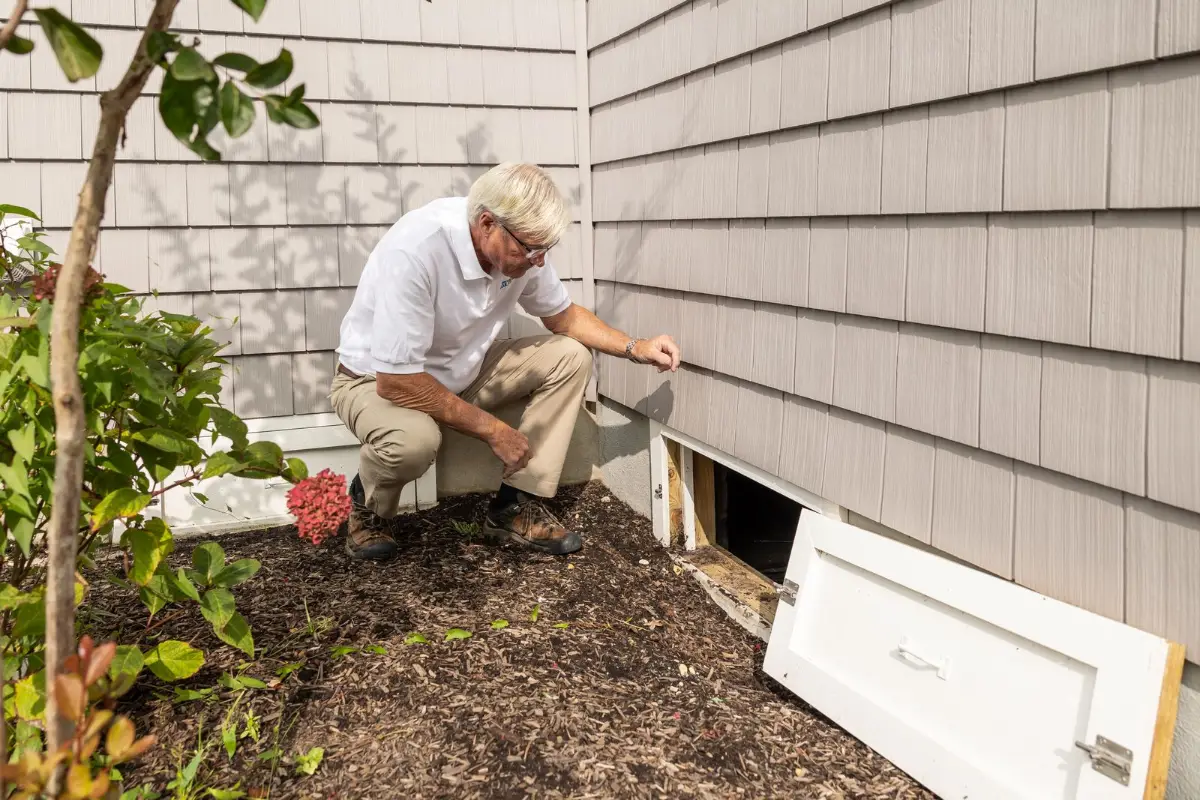
Who may sign a Title 5 report
Only a MassDEP-approved System Inspector may perform a Title 5 inspection, and the report must be on MassDEP’s official form. NEIWPCC keeps the searchable list of approved inspectors and soil evaluators, marked current as of September 10, 2026 (NEIWPCC listings). Ask any inspector for their approval number and check it against that list before you book.
MassDEP’s own hiring guide adds three things worth knowing: approval can be revoked for falsified forms, inspectors are not required to carry liability insurance, and a soil evaluator may not act for both the owner and the board of health on the same site (MassDEP hiring guide). Suspected fraudulent inspections can be reported to the Massachusetts Environmental Strike Force at 617-556-1000 (MassDEP guide). Some towns add their own gate: Pembroke rejects any report where the inspector did not notify the board and health agent in advance (Pembroke rules).
What the inspector opens, measures and looks up
The inspection is an evaluation of the tank, the distribution box, the leaching area and the site against the failure criteria in 310 CMR 15.303. It takes about 1 to 3 hours on site. Before arriving, the inspector should pull the design and as-built plans, roughly 3 years of pumping history and any water-quality results from the board of health.
On site the inspector opens the tank, checks the inlet and outlet baffles or tees and the tank walls, and notes the material and age; a metal tank without a 20-year Certificate of Compliance fails, and a metal tank over 20 years old that is otherwise sound is a conditional pass on the official form. The distribution box is opened and the liquid level compared with the outlet invert. The field is probed for ponding, breakout, damp soil and depth to groundwater. Distances to wells, surface water and wetlands are measured, because a cesspool within 50 feet of a private well or 100 feet of a surface water supply fails outright, and a leaching area at those distances goes to the board of health for further evaluation. Four results are possible; the Title 5 guide explains each and the inspection checklist tells you what to have ready.
How long a passing report stays usable
A passing report is good for a transfer that occurs within 2 years of the inspection date. It can be used for up to 3 years if accompanied by pumping records showing the tank was pumped at least once a year during that period, and one report covers more than one transfer inside its window (310 CMR 15.301).
The inspector must submit the report to the board of health within 30 days of the inspection, and failing to file creates a presumption that no inspection was done. Dennis shortens the filing window to 10 days (Dennis regulations). Because the report is public once filed, there is no such thing as a confidential Title 5; a voluntary look-see by a contractor is possible, but anything on the official form gets filed. The validity guide covers the edge cases, including inherited homes and condominiums.
The price of an inspection in 2026
A standard inspection typically runs $500 to $800, with a range of $300 to $1,200 depending on access and whether a camera or extra digging is needed (Angi, updated May 2026). A re-inspection after a repair runs about $200 to $400. Cape contractors do not publish prices, so plan on the upper half of the range here.
Two add-ons are common. Pumping at the same visit is usually $250 to $500 extra, and towns charge a filing fee when the report lands: $25 in Barnstable (fee schedule), $40 in Falmouth (fees), $75 in Plymouth since May 1, 2023 (Plymouth) and $10 in Pembroke (fee schedule). The inspection cost guide breaks the bill down further. Program terms are set by the agencies and change; confirm with the state or county page linked here. The inspection is cheap next to what it can reveal: a conditional-pass tank swap runs $4,000 to $8,000 and a failed field $10,000 to $20,000, which is why the money side of this site sits on the failed Title 5 page.
Timing the inspection around a sale
Order the inspection when you decide to list, not when you accept an offer. In season, scheduling takes days to two weeks and the report is due within 30 days, so a spring listing inspected in February leaves time to handle a conditional-pass item before a buyer sees it. The Title 5 result is the single largest closing hurdle on older Cape systems.
Weather has its own rule. If frozen ground or snow prevents the inspection before closing, it may be done as soon as weather permits, but no later than 6 months after the transfer (MassDEP guide). Some transfers need no inspection at all: refinancing, adding or removing a spouse, changes of trustee, and transfers between spouses, parents and children, full siblings, or into a trust for a first-degree relative, provided the home is used as a residence (MassDEP exemption guidance). A system with a Certificate of Compliance under 2 years old, or 3 with annual pumping, is also exempt. The do I need a Title 5 tool walks through the triggers.
Ordering your own inspection as the buyer
The regulation puts the inspection on the transferor, but nothing stops a buyer from hiring a second approved inspector, and on the Cape it is common when the seller’s report is close to its 2-year limit or the field is old. A passing report means no failure criteria were found on the day, not that the leaching area has years left.
If you order one, ask for the bedroom count the system was designed for, since design flow is 110 gallons per day per bedroom and a 4-bedroom listing served by a 3-bedroom system is a problem you inherit. Ask whether the property sits in a nitrogen sensitive area and whether an I/A operating contract exists. Yarmouth posts as-builts and pumping history online (Yarmouth Title 5 page); other towns hand them over at the health department. The buyer’s guide has the full list.
Local add-ons: towns that ask for more than the state form
Several towns layer requirements on the state inspection, and an inspector who does not know them produces a report the town rejects. Mashpee requires a fresh well test if a private well was not tested in 12 months, wants risers within 6 inches of grade, replaces tanks buried more than 4 feet deep, and fails any system with under 4 feet of natural soil above high groundwater (Mashpee regulation).
Pembroke requires advance notice to the board, confirms failures with the health agent present, and treats a conditional pass as requiring repair before transfer. Duxbury requires an inspection for any addition over 50 square feet, may require a soil evaluation with it, and tells inspectors to read observation well #79 for a high-groundwater adjustment (Duxbury). Barnstable sits at the other end: the state form, a $25 filing fee and a sewer question. Brewster’s health department advises against pumping within two weeks before an inspection (Brewster FAQ), and the pumping page explains why.
Money
Help paying for septic work
Two public programs pay for a large share of most Title 5 upgrades. Which one applies depends on the county the house is in.
Statewide, principal residence
State income tax credit for Title 5 work
- 60% of qualifying repair or replacement costs, on up to $30,000 of expenses
- Up to $18,000 in total credit per household, taken at up to $4,000 a year
- Unused credit carries forward for up to 5 years
- Applies to the home you live in, not a rental or second home
Barnstable County homeowners only
Low-interest county financing (AquiFund)
- County-run Community Septic Management Loan Program
- Interest tiers from 0% to 5%, set by the type of work and whether you live there year-round
- Repaid over up to 20 years as a betterment on your property tax bill
- Covers Title 5 repairs, replacements and nitrogen-reducing upgrades
Plymouth County homeowners
Financing for South Shore homes
- AquiFund does not extend past the Cape Cod Canal
- The Town of Plymouth runs its own Title V septic loan, repaid as a betterment on the tax bill
- MassHousing offers a septic repair loan for eligible owner-occupants statewide
- Ask your board of health which town programs are open this year
Program terms are set by the agencies and change; confirm with the state or county page linked here before you count on a number.
Licensing
Check the credentials before you sign
Massachusetts has no single statewide septic contractor license. Two separate approvals matter. A Title 5 inspection is valid only when a System Inspector approved by MassDEP performs it. Installation and repair work is permitted town by town: each board of health licenses installers and issues the Disposal System Construction Permit for the job.
You can check both yourself. The state publishes the inspector training and approval program, and the regulation itself sets out who may do what.
Three questions to ask
-
Which of you holds the Title 5 System Inspector approval, and can I see the certificate?
Only a MassDEP-approved System Inspector may sign an official inspection form. The approval is personal to the inspector, not to the company.
-
Are you on this town’s current list of approved septic installers?
Installation licenses are issued by each board of health, one town at a time. A crew licensed in Falmouth is not automatically licensed in Bourne.
-
Who pulls the permit, and will I get the as-built plan and the Certificate of Compliance?
The permit and the final sign-off are what a future buyer’s inspector will ask for. Get it in writing that both come to you when the work closes out.
The process
From your request to a site visit
-
Your request goes to one local septic company
It goes to a single septic company that works in your town and handles your kind of job. It is not sold to a list, and you will not get calls from five companies.
-
They call to set up a site visit
Expect a call, usually within one business day. The contractor asks about the house, the inspection report if you have one, and your timing, then books a visit.
-
You get a written quote and decide
After the visit you receive a written estimate with the scope and the permit plan. There is no fee and no obligation. If it is not a fit, say so and that is the end of it.
Questions homeowners ask
When do I need a Title 5 inspection?
At or within 2 years before a transfer of title, before any change of use or increase in design flow such as added bedrooms, every 3 years for shared systems and condominiums of 5 or more units, and whenever the board of health, MassDEP or a court orders one. Refinancing, adding or removing a spouse, and moving the home into a trust for a first-degree relative are not transfers.
How long is a Title 5 inspection good for?
2 years from the inspection date for a transfer of title under 310 CMR 15.301(1). It stretches to 3 years if you can show pumping records proving the tank was pumped at least once a year during that period. One report covers more than one transfer inside its window, so a house that sells twice in 18 months needs one inspection.
Who pays for the Title 5 inspection, buyer or seller?
The regulation puts the duty on the transferor to have the system inspected and to give the buyer the full report, and custom on the Cape follows that. It is negotiable in the purchase agreement, and buyers sometimes order their own. Expect $500 to $800 for a standard inspection, plus pumping if the inspector or the town requires it.
Does the tank have to be pumped for a Title 5 inspection?
State rules do not require pumping, but inspectors usually pump to see the tank walls and baffles, and some towns require it. Pumping at the visit typically adds $250 to $500. Keep the receipt with the gallons and date: annual pumping records are what extend a passing report from 2 years to 3. Brewster's health department advises against pumping in the two weeks before an inspection.
Can a Title 5 inspection be done in winter?
Yes, if the ground allows the inspector to open the tank and distribution box and probe the field. When frozen ground or snow makes that impossible, 310 CMR 15.301(1) lets the inspection happen as soon as weather permits, but no later than 6 months after the transfer. Write that arrangement into the purchase agreement so both sides and the lender know.
How long does a Title 5 inspection take?
About 1 to 3 hours on site, depending on whether the tank and distribution box have risers or must be dug up, and whether the inspector pumps. The report itself is due to the board of health within 30 days of the inspection; Dennis shortens that to 10 days. In season, scheduling typically takes days to two weeks, so book it as soon as you decide to list.
Tell us about your system
One call or form, a written quote after a site visit. Free for homeowners, no obligation.